

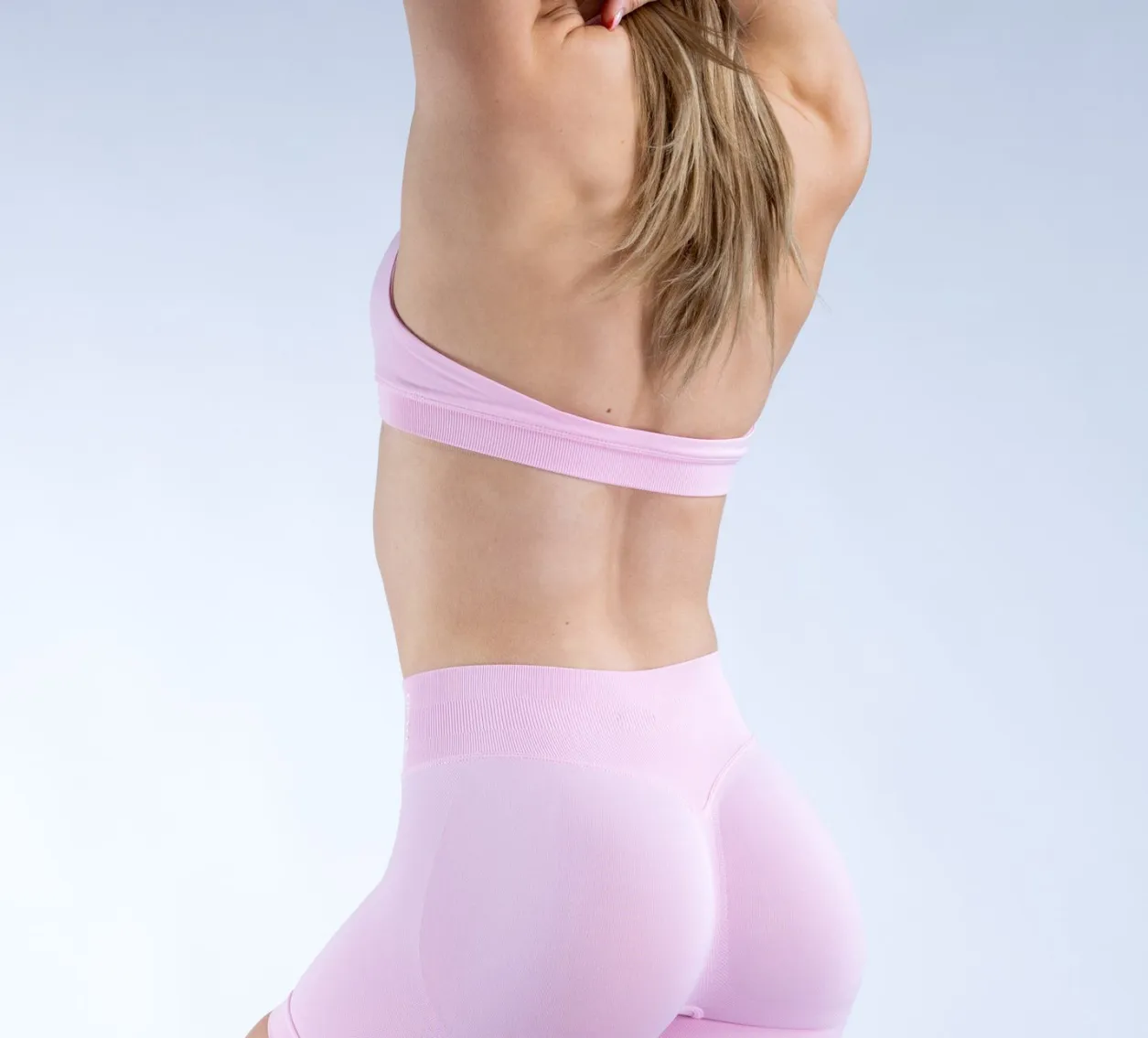
A raw-cut finish leaves edges clean and unhemmed — no seams, no bulk, no chafe — for a second-skin feel.
Raw-cut — sometimes called laser-cut or bonded-edge — finishing has become a signature of modern activewear. It’s the reason so many of today’s leggings, tops, and sports bras have no folded hem at the edge, just a clean, flush line that disappears against the skin. Here’s what raw-cut actually is, how it’s made, and when it’s the right choice for your line.
What a raw-cut finish is
A raw-cut edge is a garment edge that is cut cleanly and left unhemmed, then usually sealed with heat or bonding so it doesn’t fray. Instead of folding fabric under and stitching a hem, the edge is cut with a laser or an ultrasonic blade, which melts the cut line as it goes and locks the fibres in place. The result is a flat, seamless edge that sits flush against the body.
The payoff is in how it feels and looks: no bulky hem, no stitch line pressing into the skin, and a cleaner, more minimal silhouette. For a customer trying on a pair of leggings, the difference between a stitched hem and a raw-cut edge is immediately obvious.
Why brands choose raw-cut
The move toward raw-cut is driven by a handful of concrete benefits:
- No chafe — with no stitch line or folded hem, there’s nothing to rub against the skin during long runs or high-rep training.
- A second-skin fit — the edge lies flat instead of gripping, which matters most at the ankle, armhole, and neckline.
- Cleaner look — raw-cut edges read as premium and minimal, which has become a visual shorthand for high-end activewear.
- Lighter weight — removing hems and seam allowances trims weight, a small but real advantage in performance gear.
How raw-cut edges are produced
There are two main production methods, and the choice depends on the fabric:
Laser cutting
A laser cuts the pattern pieces and seals the edge in a single pass. It’s fast, precise, and ideal for fabrics with a high synthetic content that melts cleanly under heat. Laser cutting excels at intricate, curved edges that would be slow to hem.
Ultrasonic cutting and bonding
Ultrasonic equipment uses high-frequency vibration to cut and weld the edge at the same time. It’s the go-to for soft, thin knits where you want a particularly soft, flexible edge, and it’s also used to bond seams and panels without thread.
Both methods leave an edge that holds up to repeated washing — provided the fabric is right for the job.
Fabric requirements for raw-cut
Not every fabric can carry a raw-cut edge. The fabric needs enough synthetic fibre — typically nylon or polyester with elastane — to melt and seal cleanly rather than fray. Natural fibres like cotton fray and generally need a hem. A fabric that’s too thin or too loosely knitted may curl or degrade at the cut edge. This is exactly why raw-cut is so common in seamless and performance knits and rare in cotton basics.
Raw-cut vs hemmed: when to choose which
Raw-cut isn’t automatically better — it’s a design decision. Choose raw-cut when you want a second-skin, minimal edge on performance pieces: leggings hems, sports bra edges, armholes, and necklines. Choose a hem when the fabric needs structure, when you want a weighted edge that hangs a certain way, or when the fabric’s fibre content makes a clean seal unreliable. Many brands use both in the same range — raw-cut where the garment meets skin, hemmed where the edge carries the drape.
Where raw-cut works best
In practice, raw-cut shows up in a few predictable places:
- Leggings and tights — the ankle hem is the classic application, where a raw-cut edge removes the “sausage” grip of a stitched cuff.
- Sports bras — raw-cut edges around the band and straps reduce dig-in and chafe.
- Tops and singlets — armholes and necklines get a cleaner, softer line.
- Waistbands — bonded waistbands on seamless leggings replace an elastic fold with a smooth, high-waist fit.
Durability and care
A well-made raw-cut edge is durable — the seal, not a stitch line, holds the edge, and it doesn’t unravel. What matters is care: raw-cut edges are fine through normal machine washing, but they should be washed in a laundry bag and kept away from fabric softeners, which can degrade the bonded edge over time. With the right fabric and the right care, a raw-cut garment lasts as long as a hemmed one and feels better doing it.
Quality control for raw-cut garments
Because raw-cut removes the safety of a stitch, quality control has to be exact. In production we inspect the seal on every cut edge, test stretch-and-recovery at the seam, and check for edge curl or fraying on a pull test. The standards are simple to state — no fraying, no curling, no rough edge — but they demand a factory that controls its cutting equipment and fabric sourcing tightly.
The takeaway
Raw-cut finishing is one of the most visible upgrades you can make to an activewear line — but it only works when the fabric and the production method are chosen together. Pick a high-synthetic knit engineered to seal, match the cutting method to the fabric, and you get a garment that’s lighter, cleaner, and far more comfortable where it matters most.
Put a raw-cut finish on your line
Tell us what you’re making and we’ll recommend the right fabric and finish — with a quote within 24 hours.